The 60-Second Heel Check: 5 Signs Your "Tired Feet" Are Actually Plantar Fasciitis
Roughly 1 in 10 people develop it — most often women between 45 and 64 who spend hours on their feet. Most spend months treating the wrong problem. Take the check below.

The tell-tale moment: the first step out of bed, before the foot has "warmed up."
If your heel has been hurting for weeks and rest, gel insoles, and "comfortable shoes" haven't fixed it, there's a good chance you've been treating the wrong problem.
Plantar fasciitis isn't ordinary foot fatigue. It's strain and irritation of the plantar fascia — the thick band of tissue that runs from your heel to your toes and carries your body weight with every step. It has a very specific pattern, and you can spot it in about a minute.
Do you have the classic pattern? Answer honestly.
Tap Yes or No for each. Your result appears below.
Overnight, the fascia tightens and shortens. That first step stretches it cold — which is why the "morning stab" is the single most recognized sign.
Movement warms and loosens the fascia; rest lets it tighten again. This ease-then-return cycle is a fascia pattern, not a bruise or "tired feet."
The fascia anchors into the heel bone at one point. That anchor is where the strain concentrates — a stabbing or "stone bruise" feeling right under the heel.
Hours of standing load the fascia continuously with no recovery window. It's why nurses, teachers, retail and warehouse workers are among the most affected.
Cushioning absorbs impact, but it doesn't support the arch or offload the fascia. If padding hasn't fixed it, the problem is load, not softness.
You checked 5 of 5
That's the classic plantar-fasciitis pattern.
Your answers match the textbook presentation: morning-first-step pain, ease-then-return with rest, a focal point under the heel, long hours of load, and cushioning that hasn't fixed it. The good news — now that you know what it is, you can support the actual structure that's strained.
See what actually offloads the fascia ↓This check is for information only and isn't a diagnosis. See a professional for persistent or severe pain.
Why the usual fixes keep failing
Most people work up a ladder: rest, then gel insoles, then softer shoes, then night splints, then a podiatrist visit and custom orthotics — sometimes a cortisone shot. Each rung treats symptoms or softness. None of them changes what happens to the fascia on every single step.
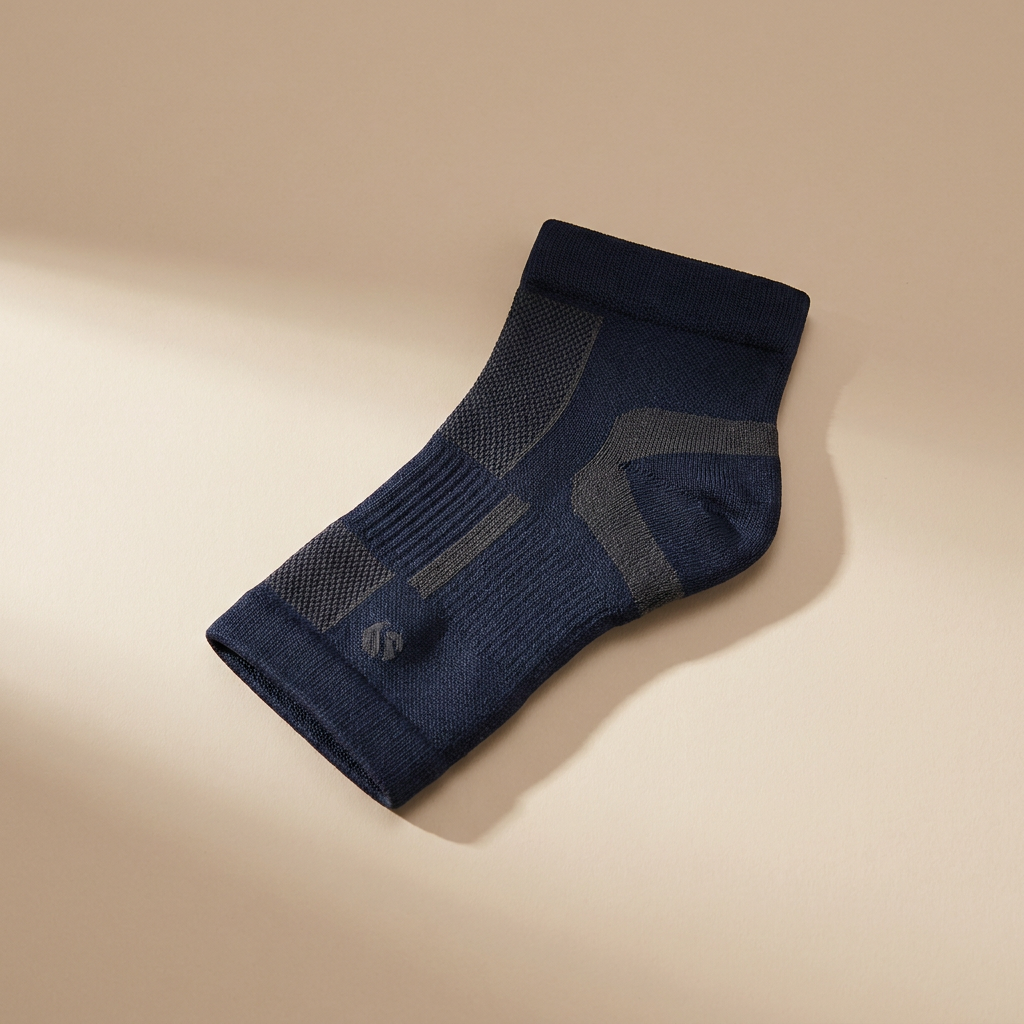
That's the mechanism behind targeted compression sleeves: a contoured arch band lifts and shares the load the fascia normally carries alone, while graduated compression keeps the tissue warm and supplied with circulation — so it isn't stretching "cold" on that first step. Worn daily, it's the difference between re-straining the fascia all day and giving it the conditions to calm down.
A sleeve isn't a miracle and it isn't a medical device — it's the lowest-cost, lowest-effort way to give the fascia all-day support before you spend hundreds going up the ladder.